

When Time Becomes the Ultimate Judge: An Analysis of Iran–U.S. Negotiations
In recent years, global developments and regional crises have once again placed “negotiation” and “diplomacy” at the center of political and public discourse. In conversations with officials, political elites, and ordinary citizens across different countries, the same question is repeatedly raised: why do some states oppose negotiations, and is there a real alternative to dialogue?
The answer to these questions, if we move beyond contemporary political circumstances, lies deeper than current interstate relations—it must be sought in historical experience. The history of diplomacy demonstrates that the core issue is often not the principle of negotiation itself, but rather its method. When dialogue turns into an instrument for imposing one side’s will, even if it ends with a formal agreement, it usually fails to create lasting legitimacy or genuine trust between the parties.
In 1812, French Emperor Napoleon Bonaparte attempted to subordinate Russia politically to his own will. Russia, instead of accepting imposed conditions, chose a strategy of resistance—one that required significant sacrifices but ultimately resulted in the defeat of Napoleon’s army and marked the beginning of the end of his empire.
Another example is the Treaty of Versailles (1919), signed after World War I to establish peace in Europe. Due to its nature and the economic and political pressure imposed on Germany, the treaty failed to create sustainable peace and instead laid the groundwork for future instability and extremism.
The Vietnam War demonstrated that even a global superpower possessing nuclear weapons cannot impose its will in the long term if it ignores moral and cultural realities. The fall of Saigon in 1975 became a symbol of the limits of imposed force in the face of national resistance. A similar lesson was repeated for the United States and NATO in Afghanistan in 2020.
For the Georgian people, some of the most significant examples come from national history. Through internal reforms and resistance, King David IV achieved victory over the Seljuks at the Battle of Didgori in 1121, laying the foundation for Georgia’s Golden Age.
Another example is the Treaty of Georgievsk of 1783, concluded when the Kingdom of Kartli-Kakheti was in a weak position. Despite this, the idea of national identity and independence remained indelibly preserved in the historical memory of the Georgian people.
The text also refers to the events of the summer of 2025, when, during military operations, Israel, the United States, and several European countries used the airspace of certain states in the region. According to the assessment presented, Iran, through a 12-day strategy of resistance, managed to neutralize the element of surprise, maintain the initiative, and ultimately impose a ceasefire agreement on the aggressor forces.
The significance of this experience goes beyond the military dimension and carries a political message: resistance can transform coercion into a path toward genuine negotiations.
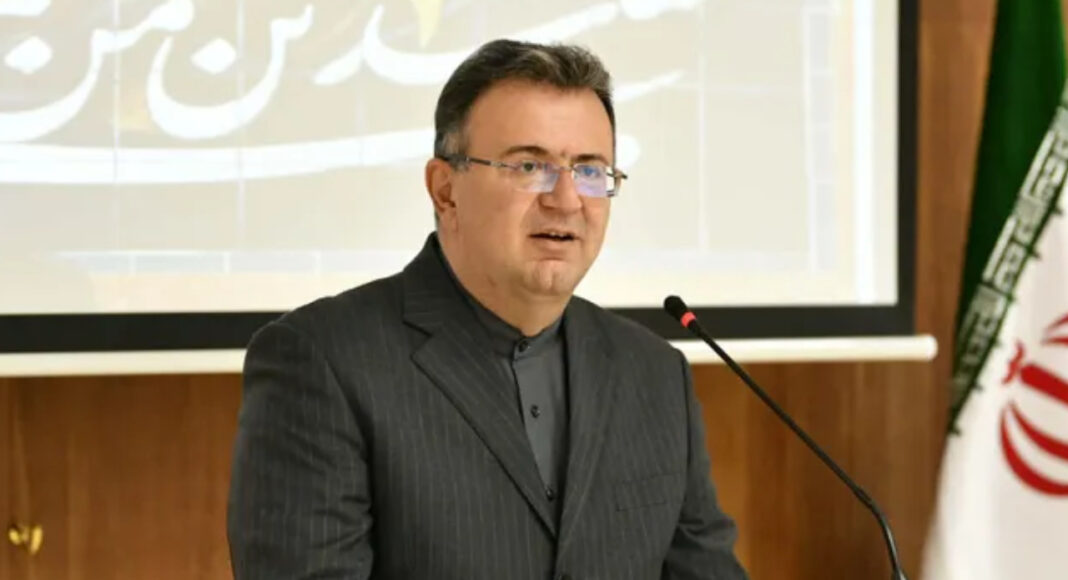
History does not repeat itself exactly, yet ignoring its lessons repeatedly places great powers on the path toward repeating past mistakes. In a world still facing global crises, the most important resource of diplomacy may not be military power, but historical memory and a deep understanding of the experiences of nations, writes Iran’s Ambassador to Georgia, Seyed Ali Mojani, on social media.