Tuesday, September 22, 2026

Negotiation or Coercion? Why Do Some States Oppose Talks — Are There Real Alternatives to Dialogue? Iran’s Ambassador on Iran–U.S. Relations in Historical Perspective

When Time Becomes the Ultimate Judge: An Analysis of Iran–U.S. Negotiations

In recent years, global developments and regional crises have once again placed “negotiation” and “diplomacy” at the center of political and public discourse. In conversations with officials, political elites, and ordinary citizens across different countries, the same question is repeatedly raised: why do some states oppose negotiations, and is there a real alternative to dialogue?

The answer to these questions, if we move beyond contemporary political circumstances, lies deeper than current interstate relations—it must be sought in historical experience. The history of diplomacy demonstrates that the core issue is often not the principle of negotiation itself, but rather its method. When dialogue turns into an instrument for imposing one side’s will, even if it ends with a formal agreement, it usually fails to create lasting legitimacy or genuine trust between the parties.

In 1812, French Emperor Napoleon Bonaparte attempted to subordinate Russia politically to his own will. Russia, instead of accepting imposed conditions, chose a strategy of resistance—one that required significant sacrifices but ultimately resulted in the defeat of Napoleon’s army and marked the beginning of the end of his empire.

Another example is the Treaty of Versailles (1919), signed after World War I to establish peace in Europe. Due to its nature and the economic and political pressure imposed on Germany, the treaty failed to create sustainable peace and instead laid the groundwork for future instability and extremism.

The Vietnam War demonstrated that even a global superpower possessing nuclear weapons cannot impose its will in the long term if it ignores moral and cultural realities. The fall of Saigon in 1975 became a symbol of the limits of imposed force in the face of national resistance. A similar lesson was repeated for the United States and NATO in Afghanistan in 2020.

For the Georgian people, some of the most significant examples come from national history. Through internal reforms and resistance, King David IV achieved victory over the Seljuks at the Battle of Didgori in 1121, laying the foundation for Georgia’s Golden Age.
Another example is the Treaty of Georgievsk of 1783, concluded when the Kingdom of Kartli-Kakheti was in a weak position. Despite this, the idea of national identity and independence remained indelibly preserved in the historical memory of the Georgian people.

The text also refers to the events of the summer of 2025, when, during military operations, Israel, the United States, and several European countries used the airspace of certain states in the region. According to the assessment presented, Iran, through a 12-day strategy of resistance, managed to neutralize the element of surprise, maintain the initiative, and ultimately impose a ceasefire agreement on the aggressor forces.

The significance of this experience goes beyond the military dimension and carries a political message: resistance can transform coercion into a path toward genuine negotiations.

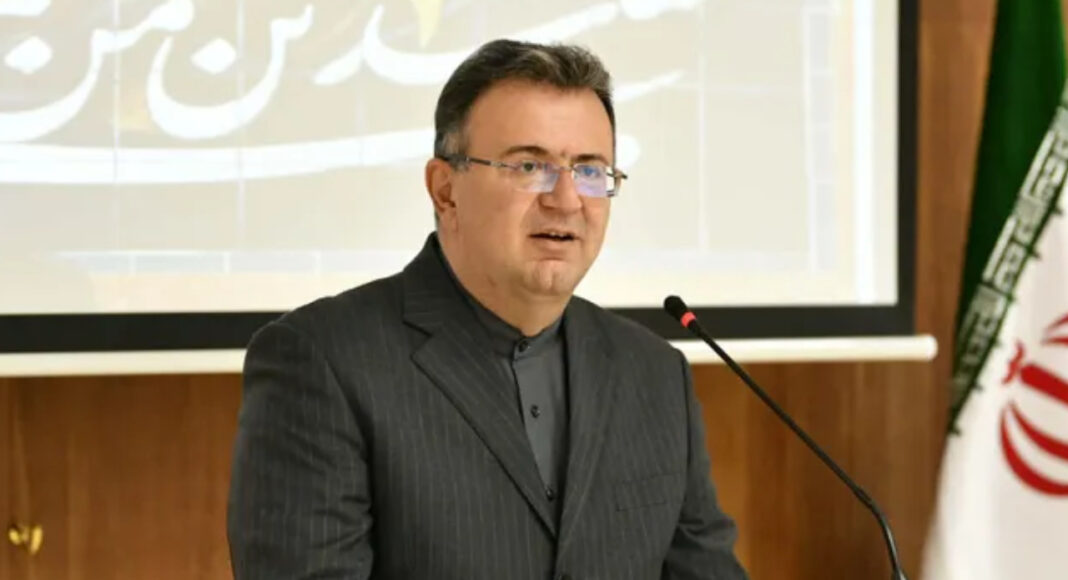
History does not repeat itself exactly, yet ignoring its lessons repeatedly places great powers on the path toward repeating past mistakes. In a world still facing global crises, the most important resource of diplomacy may not be military power, but historical memory and a deep understanding of the experiences of nations, writes Iran’s Ambassador to Georgia, Seyed Ali Mojani, on social media.

ქეთევან ნინუაhttp://tiflisnews.ge
საინფორმაციო სააგენტო tiflisnews.ge კონტაქტი- ☎️ 555 100 929

Mikheil Sarjveladze – We are unequivocally committed to quickly finding solutions that will actually be beneficial for patients with Duchenne’s disease

The meeting emphasized that we are unequivocally committed to finding solutions as quickly and effectively as possible that will actually be beneficial for each patient, - Georgian Minister of Health Mikheil Sarjveladze told journalists after a meeting with parents of patients with Duchenne's disease at the government administration.According to him, discussions with parents on the issues will continue in the near future.“This meeting was clearly useful. From the very first days of the protest and even earlier, we have had the attitude that it is very important to work with parent organizations, with parents. It is always important to talk to the people who should be served by any new decision that may be being prepared. As for the decision itself, naturally, it will require work, there is no alternative to it. This is what we have been talking about from the very first day. The issues regarding which we heard the views of the parents are critically important, this is also a subject of special interest and a circumstance that must be paid attention to. Making decisions on these issues is not easy, since we are talking about four types of medications, around which the status, condition, mood, potential, even readiness to make a decision are at a qualitatively different stage. I have already mentioned that there are fewer questions regarding two of the named medications, and, let’s say, more regarding the other. Of course, all this definitely requires detailed analysis, correct judgment of what should be paid attention to. And decisions should be made based on this. In this sense, it was a rather fruitful, busy and important meeting. Issues were also discussed, such as the misuse of this by politicians. The circumstance was emphasized that we are unequivocally disposed to find solutions as quickly and effectively as possible, which will actually be useful for each patient. Most likely, we will have another meeting in the near future, the discussion will continue. The moment the decision is ready to be made, it will be made without any delay. For this, it is necessary that the decision is ready to be made. During the next meetings, we will also talk about how to continue working, where we are at what stage, how to continue communicating with each other and various formats. Everything, all decisions will be made based on what is most useful for the patients whom this should actually serve,” Sarjveladze said.

Donald Trump: When it comes to elections, we are worse off than third world countries

US President Donald Trump has once again criticized the current electoral system in America.As the White House leader stated in one of the podcasts, the 2020 presidential election, in which Joe Biden won, was rigged.“The 2020 election was rigged... When it comes to elections, we are in a worse situation than third world countries,” Trump said.The US President once again stressed the need to pass the “Save America Act,” which is focused on improving the electoral system.

Zurab Pataradze nominated to lead Adjara government

Zurab Pataradze has been nominated for the role of Chairman of the Government of the Autonomous Republic of Adjara.The nomination was announced at the Presidential Palace by President Mikheil Kavelashvili and Prime Minister Irakli Kobakhidze.Pataradze, who previously served as Georgia’s ambassador to Azerbaijan, has a notable history in regional leadership. He held the position of Chairman of the Government of Ajara from 2016 to 2018.He is set to succeed Sulkhan Tamazashvili, who was appointed Minister of Internal Affairs of Georgia on April 21.

PM: Government reshuffle aims to ensure tighter coordination between law enforcement agencies

“The basis for the government reshuffle is very simple—we need close coordination between law enforcement agencies,” Georgian Prime Minister Irakli Kobakhidze told journalists.According to him, numerous issues require daily joint action by law enforcement institutions.“The basis for the government reshuffle is straightforward: we need close and even further strengthened coordination between law enforcement agencies. We have already had good practice in this over the past months, for example, when we had to respond to the events of October 4. Coordination was effective, although it was not formally structured.Now we have the opportunity to continue this work in a formalized and stronger coordination framework. There are many issues that must be addressed jointly by law enforcement agencies on a daily basis. Personally, it is not possible for me to monitor every issue every day. That is why the creation of a new position is a pragmatic decision based on these needs,” the Prime Minister said.

Economy Minister to hold meeting in China on launching direct flights between Tbilisi and Shanghai

During her visit to China, Minister of Economy and Sustainable Development Mariam Kvrivishvili will conduct another meeting focused on the introduction of direct flights between Tbilisi and Shanghai.According to the Ministry of Economy and Sustainable Development, negotiations have been ongoing for several months with local Chinese airlines to establish regular flights on the Shanghai-Tbilisi-Shanghai route.“The strategic partnership and economic ties between Georgia and China have grown significantly in recent years. Since signing a free trade agreement in 2018, trade volume has surged, with a 148% increase in turnover by 2025 compared to 2017. Notably, the implementation of the visa-free travel agreement in 2024 has played a major role in boosting both air traffic and tourist arrivals. In the first quarter of 2026, the number of visitors from China rose by 49%, a growth driven by high-capacity direct flights.In light of these dynamic developments in trade and economic relations, active negotiations are underway to establish additional direct flights, including on the Tbilisi-Shanghai route, where flights have not previously been operated,” the Ministry of Economy and Sustainable Development stated.

Latest News