
Friday, February 6, 2026

Negotiation or Coercion? Why Do Some States Oppose Talks — Are There Real Alternatives to Dialogue? Iran’s Ambassador on Iran–U.S. Relations in Historical Perspective

When Time Becomes the Ultimate Judge: An Analysis of Iran–U.S. Negotiations

In recent years, global developments and regional crises have once again placed “negotiation” and “diplomacy” at the center of political and public discourse. In conversations with officials, political elites, and ordinary citizens across different countries, the same question is repeatedly raised: why do some states oppose negotiations, and is there a real alternative to dialogue?

The answer to these questions, if we move beyond contemporary political circumstances, lies deeper than current interstate relations—it must be sought in historical experience. The history of diplomacy demonstrates that the core issue is often not the principle of negotiation itself, but rather its method. When dialogue turns into an instrument for imposing one side’s will, even if it ends with a formal agreement, it usually fails to create lasting legitimacy or genuine trust between the parties.

In 1812, French Emperor Napoleon Bonaparte attempted to subordinate Russia politically to his own will. Russia, instead of accepting imposed conditions, chose a strategy of resistance—one that required significant sacrifices but ultimately resulted in the defeat of Napoleon’s army and marked the beginning of the end of his empire.

Another example is the Treaty of Versailles (1919), signed after World War I to establish peace in Europe. Due to its nature and the economic and political pressure imposed on Germany, the treaty failed to create sustainable peace and instead laid the groundwork for future instability and extremism.

The Vietnam War demonstrated that even a global superpower possessing nuclear weapons cannot impose its will in the long term if it ignores moral and cultural realities. The fall of Saigon in 1975 became a symbol of the limits of imposed force in the face of national resistance. A similar lesson was repeated for the United States and NATO in Afghanistan in 2020.

For the Georgian people, some of the most significant examples come from national history. Through internal reforms and resistance, King David IV achieved victory over the Seljuks at the Battle of Didgori in 1121, laying the foundation for Georgia’s Golden Age.
Another example is the Treaty of Georgievsk of 1783, concluded when the Kingdom of Kartli-Kakheti was in a weak position. Despite this, the idea of national identity and independence remained indelibly preserved in the historical memory of the Georgian people.

The text also refers to the events of the summer of 2025, when, during military operations, Israel, the United States, and several European countries used the airspace of certain states in the region. According to the assessment presented, Iran, through a 12-day strategy of resistance, managed to neutralize the element of surprise, maintain the initiative, and ultimately impose a ceasefire agreement on the aggressor forces.

The significance of this experience goes beyond the military dimension and carries a political message: resistance can transform coercion into a path toward genuine negotiations.

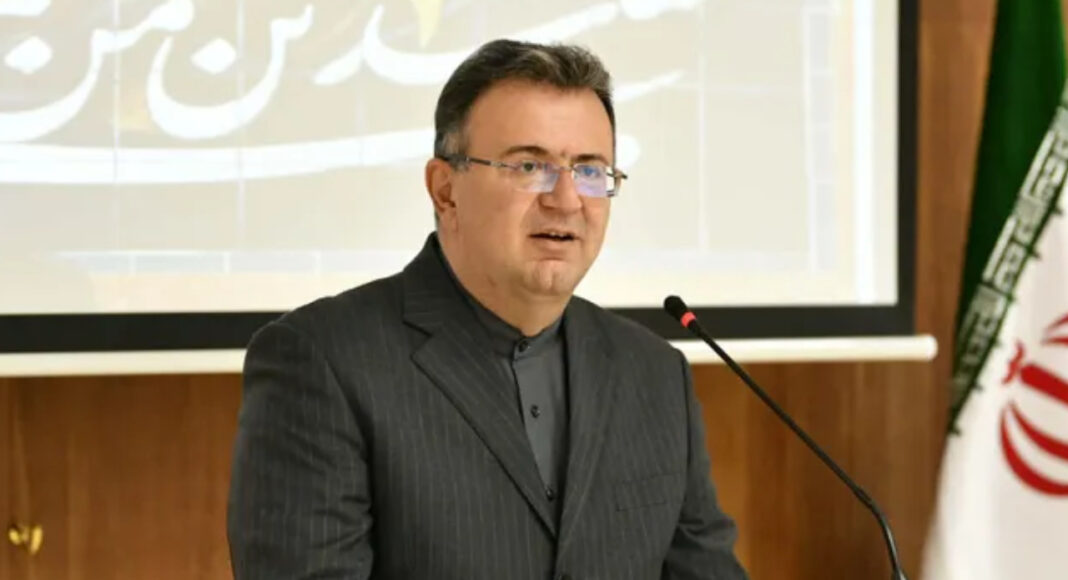
History does not repeat itself exactly, yet ignoring its lessons repeatedly places great powers on the path toward repeating past mistakes. In a world still facing global crises, the most important resource of diplomacy may not be military power, but historical memory and a deep understanding of the experiences of nations, writes Iran’s Ambassador to Georgia, Seyed Ali Mojani, on social media.

ქეთევან ნინუაhttp://tiflisnews.ge
საინფორმაციო სააგენტო tiflisnews.ge კონტაქტი- ☎️ 555 100 929

US cuts contact with Polish parliament speaker over Trump ‘insults’

WARSAW, Feb 5 (Reuters) - The U.S. ambassador in Warsaw cut off contact with Poland's parliament speaker on Thursday, accusing him of insulting Donald Trump after he criticised the president's policies and declined to support his Nobel Peace Prize ambitions. Ambassador Tom Rose's furious response to Parliament Speaker Wlodzimierz Czarzasty underlined the precarious balancing act politicians from Poland's pro-European coalition government face in keeping their most important ally onside while Trump is pursuing "America First" policies many of them find unnerving.

Customs officers prevented the import of undeclared gold jewelry at Kutaisi Airport

On February 1-5, 3 attempts to import undeclared gold jewelry were prevented at the customs checkpoint "Kutaisi Airport".Customs officers of the Revenue Service of the Ministry of Finance, based on suspicion, as a result of a detailed physical inspection, as well as checking the belongings of foreign citizens, discovered undeclared gold jewelry (total weight 258 grams).The total customs value of the undeclared goods amounted to 75,186 GEL.The case materials against two violators were transferred to the Investigation Service of the Ministry of Finance for further action, and one violator was charged under Part I of Article 168 of the Customs Code. Accordingly, a total fine of 7,763 GEL was imposed.Revenue Service of the Ministry of Finance

Georgia’s President meets athletes competing for Georgia at XXV Winter Olympic Games

Georgia’s President Mikheil Kavelashvili, accompanied by his wife and delegation, met with the figure skaters competing for Georgia.At the meeting, the President thanked the athletes for their success at the European Championship.“I, as a former athlete, know your feelings, what you are thinking, what the preparatory theme is like, and the entire concentration is on the performance. I wish to express my heartfelt gratitude on behalf of our people for the joy we experienced and received during the European Championship. This is the beginning; you have accomplished a tremendous thing. You know how much Georgians love sport and the pride they feel in victory. It is also a great honour for you to have brought such immense joy to our nation and our people. For this, I thank each of you once again,” Mikheil Kavelashvili noted.According to Mikheil Kavelashvili, the athletes’ success is an example and motivation for young people.“I am convinced that many children, girls and boys will begin taking up figure skating. This is always contagious. Success is not solely about becoming champions; it also provides the foundation for future generations to witness this achievement and to develop a desire to pursue sport. You are the exemplification of this,” noted Mikheil Kavelashvili.According to him, he is confident that Georgia’s Olympic delegation will compete successfully.“I had great motivation to meet you. I want you to know that the entire country stands beside you. This will be an additional stimulus and motivation. You are high-level professionals. We are beside you, we wish you success, and we believe that you will compete successfully,” the President of Georgia stated.Eight athletes from Georgia will compete in two disciplines at the Winter Olympic Games: figure skating and alpine skiing. From Georgia’s Olympic delegation, the alpine skiers are in Cortina, where competitions in slalom and giant slalom will be held.As part of the visit, Mikheil Kavelashvili will support Georgia’s representatives at the figure skating team event at the XXV Winter Olympic Games.According to the Georgian President’s administration, the President of Georgia will attend a dinner hosted in the name of Italy’s President, Sergio Mattarella, in honour of foreign heads of state attending the opening ceremony of the XXV Winter Olympic Games before the Olympics opening.The President of Georgia will also attend a dinner hosted by the President of the International Olympic Committee, Kirsty Coventry.

PM: Georgia’s stated goal is EU membership

Georgian Prime Minister Irakli Kobakhidze said the country’s stated goal is eventual membership in the European Union, adding that the government is open to discussion on any topic.“We have a stated goal — that Georgia wants to eventually become a member of the European Union. As for discussions on any topic, we are ready for this, we can discuss the pros and cons of any process. However, a constitutional task is a constitutional task,” Kobakhidze told journalists.

PM: Debate open on any topic, discussions possible if constitutional order respected

Prime Minister Irakli Kobakhidze told Georgian journalists in Dubai that debates can cover any topic, provided fundamental principles are respected, including the recognition of the constitutional order.“There is a lot of speculation across the political spectrum. Regarding the proposal to hold debates on any subject, we can take any topic and discuss it. The main requirement is that fundamental principles are respected, one of which is the recognition of the constitutional order.A healthy discussion can take place on any issue. This does not mean we need to rethink our constitutional tasks. The point is that every topic has its advantages and disadvantages, and a normal, healthy discussion can examine these—for example, the pros and cons of European integration. The key is that the discussion is argument-based, open, transparent, and provides the public with clear and informative perspectives on all topics,” the Prime Minister added.

Latest News