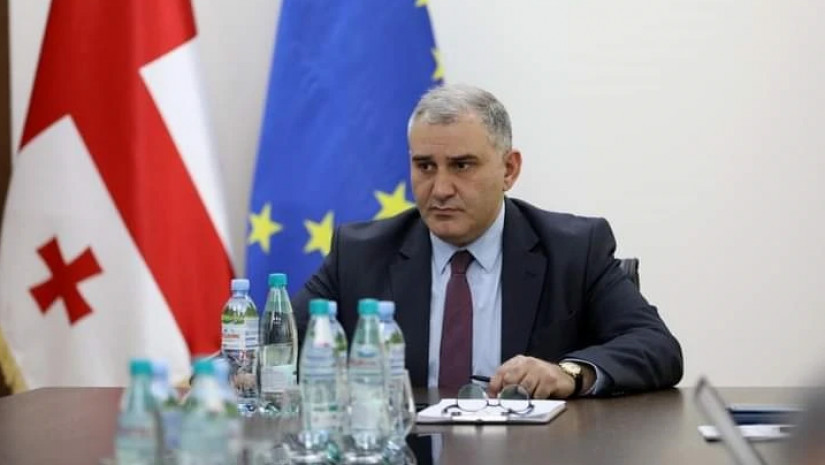

The Georgian Ministry of Health is launching a comprehensive review of the unified database of socially vulnerable families, Health Minister Mikheil Sarjveladze announced at a press briefing today.
According to the Minister, the database continues to include individuals and families who no longer require state social assistance.
“At present, the number of families registered in the unified database of socially vulnerable households and receiving financial assistance exceeds 185,000, with a combined membership of some 710,000 individuals. In total, nearly 400,000 families, approximately 1,300,000 individuals, are registered in the database. More than half of these are not receiving any allowance, though a significant proportion do benefit from various types of concession provided under current legislation,” the Minister stated.
Sarjveladze also noted that the database has repeatedly been exploited for unscrupulous political point-scoring.
“Since 2012, the eligibility threshold score for receiving assistance has been raised twice, to support a greater number of people. Had that threshold not been increased, had the state not extended allowances to those who are comparatively better off, the number of recipient families today would stand at no more than 120,000, rather than 185,000.
Regrettably, delays in the verification process, coupled with various objective and subjective factors, provided opposition-minded individuals with grounds for such speculation. It is also important to note that, in the aftermath of the COVID pandemic, a so-called moratorium was in place, during which, with only rare exceptions, household verifications were effectively suspended. As a result, the database still contains individuals and families who, thankfully, no longer require state social support,” Sarjveladze explained.
The Minister further revealed that some cases are entirely anomalous. One family registered in the database and receiving assistance had, in the preceding three months alone, recorded a combined income of several tens of thousands of lari. Another had purchased multiple vehicles worth several tens of thousands of lari within a single year. One household acquired a brand-new 2025 model car that same year, while another had taken out bank loans amounting to several hundred thousand lari.
“The number of such families is not insignificant, though in the majority of cases, what we are dealing with are households whose material circumstances have improved over time, whose situation is no longer such that the state ought to be providing them with financial assistance,” Sarjveladze concluded.