Thursday, April 16, 2026

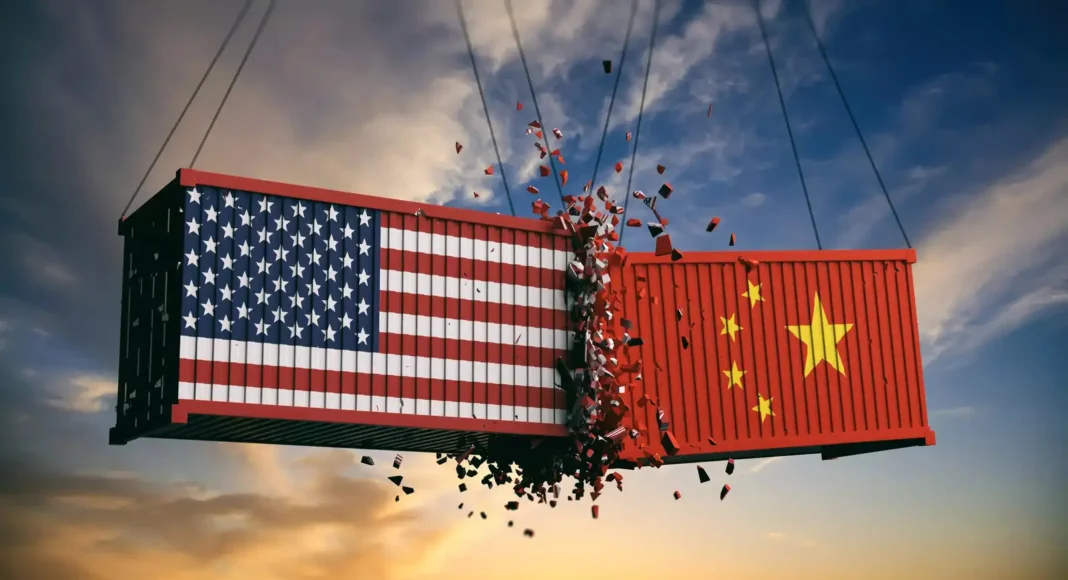
China to lift additional tariffs to 84% on imported U.S. products

Happy Sunday. April 2 — or “liberation day”, as Donald Trump has dubbed it — is imminent. US trading partners will soon discover what the president’s “reciprocal” tariff plan looks like.

Fear of a deglobalising world is high. With the global goods trade slowing and national security doctrine in vogue, many worry that Trump’s tariffs could be the straw that breaks globalisation’s back.

So for this week’s dialectic, I went in search of counter-arguments. Here’s why Trump 2.0 will not be a fatal blow to international trade.

First, the importance of the US to global trade can be overstated, since it is the world’s largest economy. America accounts for just 13 per cent of global goods imports — down from close to one-fifth two decades ago. That makes it the largest importer and a notable influence on trade patterns, but not sufficient to reverse globalisation on its own.

For measure, Simon Evenett, professor at the IMD Business School, recently ran a helpful thought experiment. He found that even if the US cut off all goods imports, 70 of its trading partners would fully make up their lost sales to the US within one year, and 115 would do so within five years, assuming they maintained their current export growth rates to other markets.ნThe US isn’t the main driver of global trade growth. Europe — and more recently China — are bigger contributors. And both economic powers are likely to continue advocating for free trade, according to recent analysis by Mallika Sachdeva, a strategist at Deutsche Bank Research. China needs to secure raw material inputs (hence its Belt and Road Initiative) and global markets to support President Xi Jinping’s growth strategy, which centres on “new quality productive forces”. Beijing has already talked up the need to “resist unilateralism” as the US ramps up protectionism.

Still, for all the hubbub about the US-China trade war, the share of world merchandise trade that takes place directly between the two is only about 2.6 per cent.

The EU plays a more important role than both in driving global trade — one that will probably grow. Trade remains central to the European project. Intra-EU trade is likely to improve as the bloc boosts defence and economic integration efforts in response to Trump’s belligerence. Brussels also recognises the need to be pragmatic in trading with China, given its ambitions to quickly go green and jump up the tech curve. (For instance, by using intellectual property transfer as a condition for Chinese production to shift into Europe.)

Beyond Europe and China, India, south-east Asia, east Asia and the Middle East are expected to prop up growth in global trade volumes until 2029, according to the DHL Trade Atlas. Next, though governments are trying to boost national supply chain resilience following the Covid-19 pandemic and war in Ukraine, few are looking to emulate Trump. Most nations are aware of their resource limitations (particularly small and developing nations, which cannot maintain reasonable living standards without trade).

“As the US retreats from the global stage, other governments will want to lean in to offset potential sales and import losses with new deals,” said Scott Lincicome, a vice-president at the Cato Institute.

Outside the US, bilateral and multilateral trade negotiations continue. Recently, the EU and Mercosur and Australia and the UAE reached agreements. The EU, the Gulf Cooperation Council, the UK and India are all also pursuing various deals across goods, services and investment.To put the importance of other trading regions and their continued motivations to pursue openness into perspective, Steven Altman, a senior research scholar at the NYU Stern School of Business and lead author of the DHL Trade Atlas, ran through a worst-case scenario on US tariffs:

Full implementation of tariffs proposed during the Trump campaign and retaliation by other countries against the US could cut global goods trade volumes by up to 10 per cent versus baseline growth in the long run. But even that downside scenario still implies about 5 per cent more global goods trade in 2029 than in 2024. This leads me to the view that US tariff increases are more likely to slow than to reverse the growth of global trade over time.

Sure, but isn’t the historic rise in global merchandise trade already slowing? Might a worst-case tariff scenario worsen that trend?

What matters is why it’s slowing in the first place. One factor is geopolitics. Asset manager PGIM argues that globalisation has entered a “dual-track era”. It finds deglobalisation in items with national security implications, such as artificial intelligence, high-end semiconductors, critical minerals and military technology. (This captures most media and political focus.)

But outside the limelight, it finds continued, high-speed globalisation for goods and services, which account for the remaining 75 per cent of global GDP. This includes professional and IT services, entertainment, consumer electronics and luxury goods.

Even so, the importance of trade to the global economy has ebbed and flowed throughout history. The elasticity of trade to world GDP fluctuates with geopolitical cycles, which influence national debates about protecting industries and workers. But economic reality has a way of reasserting itself; the goods trade keeps rising over time.

Efficiencies from specialisms around the world — which enable the import of cheaper, higher-quality or simply rare inputs and products — eventually undermine the logic of protecting inefficient jobs and industries (as do the profits that come from selling those specialisms at scale in a global market).

The inverse relationship between the KOF Globalisation Index — a measure of the economic, social and political dimensions of globalisation — and inflation in advanced economies is a case in point.

So, it is likely that once governments have built sufficient national capabilities and resilience in critical industries, economic rationale will take over. After all, the definition of critical industries is dynamic.

“Protectionism comes and goes in cycles, but the underlying structural force of comparative advantage eventually prevails to establish a new equilibrium that continues to favour expanding overall trade, especially when factoring in both goods and services,” said Parag Khanna, a global strategy advisor.

In the long run then, it’s hard to see how the hit from Trump’s tariff assault in the current “dual-track era” will be more than a blip.

In the short run, the US president may even end up curbing his inflationary policies (as I explored in last week’s newsletter). Import substitution is a decade-long undertaking. (US producers will take time to switch to domestic supply chains; imports won’t drop off immediately.) Political cycles are shorter.

A recent survey by the Cato Institute and YouGov found 40 per cent of American voters consider inflation to be a major issue. Only 1 per cent mentioned globalisation and trade.

As Khanna alluded to, globalisation is more than just the trade in goods, which Trump is focused on (for now). The trade in commercial services — covering business, finance and ICT — has grown twice as fast as the goods trade since 1990. Rising digital trade is one component of that and is expected to rise faster as AI services grow.

The flow of services and data now plays a stronger role in the global economy (particularly as developing nations consume more of the goods they produce), notes a McKinsey report on the future of trade. It also reckons that, on net, new technology could dampen the global goods trade. (For example, electric vehicles need fewer mechanical parts than those with an internal combustion engine.) The point is that benign economic shifts — not just geopolitics — contribute to the slowing of the global goods trade.

Overall, then, it’s hard to see Trump’s tariffs causing a sustained deglobalisation in trade.

Sure, there are broader dimensions of globalisation to assess, such as immigration and capital flows. But even then, DHL’s Global Connectedness Index shows that international flows across trade, capital, information and people all rose between 2019 and 2024, a period when deglobalisation chatter amplified.

This does not mean that aggressive protectionism by the world’s largest economy isn’t harmful to the global economy. It is. But it is best countered by more free trade. Indeed, in the long run, the economic motive behind globalisation in all its forms gives it extraordinary staying power.

Send me your rebuttals and thoughts to freelunch@ft.com or on X @tejparikh90.

Food for thought Can social media posts help predict the stock market? This VoxEu column analyses nearly 3mn investment-related posts on X, and finds that social media-based sentiment strongly predicts market trends in developed and emerging economies.

ქეთევან ნინუაhttp://tiflisnews.ge
საინფორმაციო სააგენტო tiflisnews.ge კონტაქტი- ☎️ 555 100 929

Chairman of Supreme Council of Adjara, David Gabaidze, resigns

The Chairman of the Supreme Council of Adjara, David Gabaidze, has announced his resignation today.Expressing his gratitude, Gabaidze thanked the Georgian Dream party, its founder, and all its members, emphasising that his decision was made on personal grounds.He firmly denied rumours suggesting that his close ties to Tornike Rizhvadze influenced his resignation.“I have been contemplating this for a considerable time and have discussed it with my team. Having led the Supreme Council for less than ten years, I believe it is time for new directions. Regarding my connection with Tornike Rizhvadze’s team, it’s important to remember that I was appointed as Chairman of the Supreme Council before Tornike Rizhvadze assumed his role as Chairman of the Government,” Gabaidze explained.He also announced that he will soon relinquish his mandate as a member of the Supreme Council. While he did not disclose specific details, Gabaidze hinted that he has other opportunities ahead.Gabaidze was elected for a third term as Chairman of the Supreme Council following the most recent elections.

Georgian PM on conversation with Marco Rubio: Discussed partnership reset, reinforcing Georgia’s role in South Caucasus

Georgian Prime Minister Irakli Kobakhidze reported having a productive phone conversation with US Secretary of State Marco Rubio, focusing on “resetting the partnership” and Georgia’s role in the Caucasus region.“I had a productive phone conversation with US Secretary of State Marco Rubio. We empathized the importance of resetting our partnership and reinforcing Georgia’s role as a strong partner in the South Caucasus. Committed to strengthening Georgia–U.S. ties and advancing regional stability and connectivity,” Irakli Kobakhidze wrote on a social network.The U.S. State Department released information about a phone conversation between Secretary of State Marco Rubio and Georgian Prime Minister Irakli Kobakhidze.According to the Department, “Secretary of State Marco Rubio spoke with Georgia Prime Minister Irakli Kobakhidze today. They discussed areas of mutual interest including security in the Caucasus and Black Sea region.”

Health Minister: State to expand reference price coverage to protect consumers

‘The state will actively intervene in the pharmaceutical market to protect consumer interests and ensure fair pricing. The authorities believe that the range of medicines subject to reference pricing should be expanded to ensure broader access and affordability,” the Minister of Health of Georgia, Mikheil Sarjveladze, announced. Mikheil Sarjveladze explained that the mechanism for setting reference prices for medicines is actively in place, with ongoing price revisions. At this stage, he emphasized, the reference prices have been set fairly. “If the need arises to adjust the price of a specific medicine, we will address it promptly within the established schedule. Our main priority remains the same: protecting the consumer’s interests. We believe the prices already set are fair,” said Sarjveladze. He also noted that the ministry aims to ensure that medicines in Georgia are available at prices comparable to those in four relevant reference countries.

Tamar Bagrationi: Representing Georgia at Global Summit was a great honor

“The Global Summit, where I was invited by the First Lady of the United States, Melania Trump, has ended. For me, this summit was a great experience and a great honor, as I represented Georgia,” said the First Lady of Georgia, Tamar Bagrationi, while summarizing her visit to the United States.According to Bagrationi, the summit brought together representatives from 45 countries and focused on globally significant issues.“The topic was important and relevant worldwide, addressing the development of new technologies and their integration into education. Many countries expressed interest in hosting events within the framework of this platform. I am convinced that the personal relationships formed during the summit are among the most valuable outcomes,” she said.The Global Summit, titled Together for a Better Future, was held in Washington, D.C. at the invitation of Melania Trump.The Georgian delegation also included Baia Kvitsiani, Deputy Minister of Education, Science and Youth of Georgia, and Mariam Lashkhi, Chairwoman of the Parliament’s Committee on Education, Science and Youth Affairs.

Metropolitan Shio: Passing of righteous man carries its own consolation; we witnessed true miracle, as Georgia rose up to honour Ilia II

“The passing of a righteous man carries its own consolation, and we have been witnesses to a true miracle. All of Georgia rose to its feet and stirred, to pay homage, to give thanks, to show its love for Ilia II. That love, that unity, has given us immense spiritual strength and consolation to carry us through the most difficult of days. It gives us hope that we shall be able to preserve the great values that our Patriarchs have handed down to us,” declared His Eminence Shio (Mujiri), Metropolitan of Senaki and Chkhorotsku, and Locum Tenens of the Patriarchal Throne, in a sermon delivered at Sioni Cathedral.Metropolitan Shio extended his congratulations to the people on the Day of the Restoration of the Autocephaly of the Georgian Church, and spoke of the labours of Ilia II in that cause.“It is true that in 1917 we proclaimed the restoration of Autocephaly, yet what was still required was its recognition by the Patriarchate of Constantinople and by the Orthodox Churches of the world. It was His Holiness and Beatitude Catholicos-Patriarch Ilia II who took this great cause upon himself. Through years of tireless labour and by the weight of his immense moral authority, he achieved what had long been sought: in 1990, on the Feast of the Triumph of Orthodoxy in Constantinople, the Ecumenical Patriarch, His All-Holiness Dimitrios I, presented the Georgian Church with the documents confirming and affirming the recognition of our Church’s Autocephaly and Patriarchal title, rights that had belonged to our Church since antiquity. It may be said that our Catholicos-Patriarch Ilia II crowned the labours and struggles of our forebears in the cause of Autocephaly.Today we stand in this holy Cathedral of Sioni, filled with deep reverence and gratitude towards our holy Patriarchs and ancestors, those who would not accept, who never accepted, the loss of Autocephaly. Through their self-sacrifice, their toil, and at the cost of their greatest efforts, they restored and returned to our country and our Church the ancient, historic Autocephaly that had once been its own. These were the holy Catholicos-Patriarchs Kirion, Ambrosi, Kalistrate, Leonide, Kristepore, Melkisedek, Eprem, and others, both clergy and laity, among them Metropolitan Anton Giorgadze and many more. The Catholicos-Patriarchs rest here, in this holy cathedral, and beside them, their worthy heir and the continuer of their work, Catholicos-Patriarch Ilia II, has now found his eternal resting place. As the Gospel says, all can see how his works shine before men, that we may glorify our Father in Heaven.These have been days of the deepest grief for us. And yet we know that when a holy and righteous person departs this life, consolation and even joy accompany that passing. We waited to see how this would manifest. And we have been witnesses to a true miracle, all of Georgia rose to its feet and moved towards the remains of His Holiness and Beatitude, to venerate, to give thanks, to express its love. There was a wondrous unity, a love for God and a love for him personally. For in him, our people glorify the Church and glorify God; it is to God that they give thanks. This outpouring of love and unity gives us great spiritual strength and consolation to carry us through these hardest of days. It also gives us great hope that, with God’s help, we shall be able to preserve those great values bequeathed to us by our great Patriarchs and forebears, above all, what His Holiness Catholicos-Patriarch Ilia left to us as his legacy: true faith in God, fidelity to the homeland, and love for one’s fellow man. If we preserve these things, if we strive and labour for their sake, the Lord will surely come to our aid and grant us the strength to preserve both our ecclesiastical Autocephaly and our national independence, and to see our country made whole and strong once more.Once again, I congratulate you on the Day of the Restoration of the Autocephaly of the Georgian Church. May God bless you and grant you strength. May God bless, remember, have mercy upon, and grant eternal rest to the immortal soul of His Holiness and Beatitude, Catholicos-Patriarch Ilia II. May God bless, unite, and save Georgia,” Metropolitan Shio has said.Today, March 25, marks the ninth day since the passing of Ilia II. At Sioni Cathedral, the Locum Tenens of the Patriarchal Throne, Metropolitan Shio (Mujiri) of Senaki and Chkhorotsku, served an intercessory prayer and prayer vigil together with the assembled bishops and clergy. The service was attended by the Prime Minister of Georgia, Irakli Kobakhidze, the President of Georgia, Mikheil Kavelashvili, and the Speaker of the Georgian Parliament, Shalva Papuashvili.His Holiness Ilia II, the 141st Catholicos-Patriarch of All Georgia, passed away on March 17 at the age of 93. He was laid to rest at Sioni Cathedral on March 22.

Latest News