Saturday, April 4, 2026

Ali Mojani: “The Shah left and the Imam came” – Iran marks the 48th anniversary of the Revolution. This event was not merely a change of political power. For the Iranian people, the Islamic Revolution represented a fundamental transformation of the essence of sovereignty, independence, and national dignity

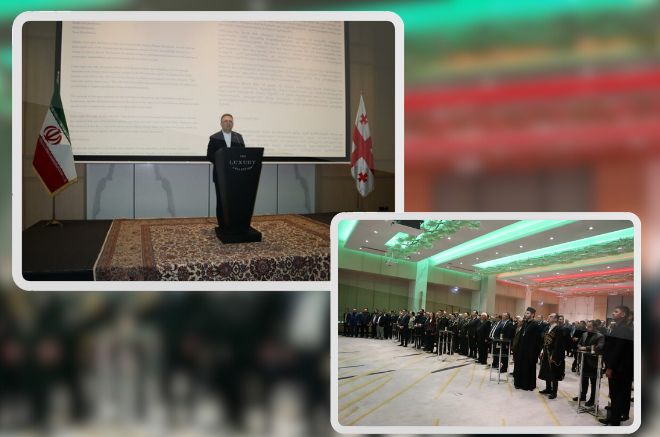
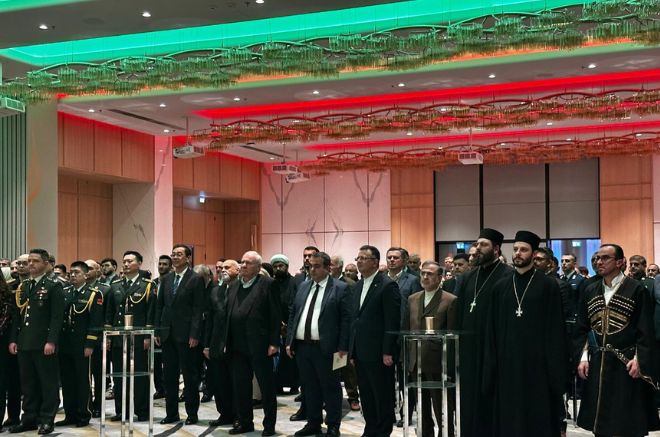
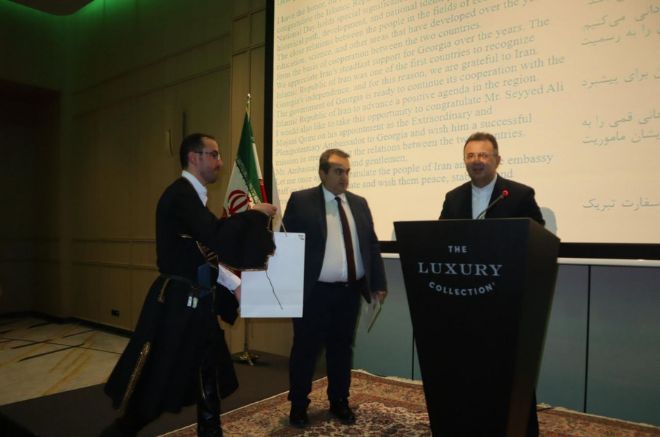
On February 11, an event dedicated to the 47th anniversary of the victory of the Islamic Revolution of Iran was held in Tbilisi.

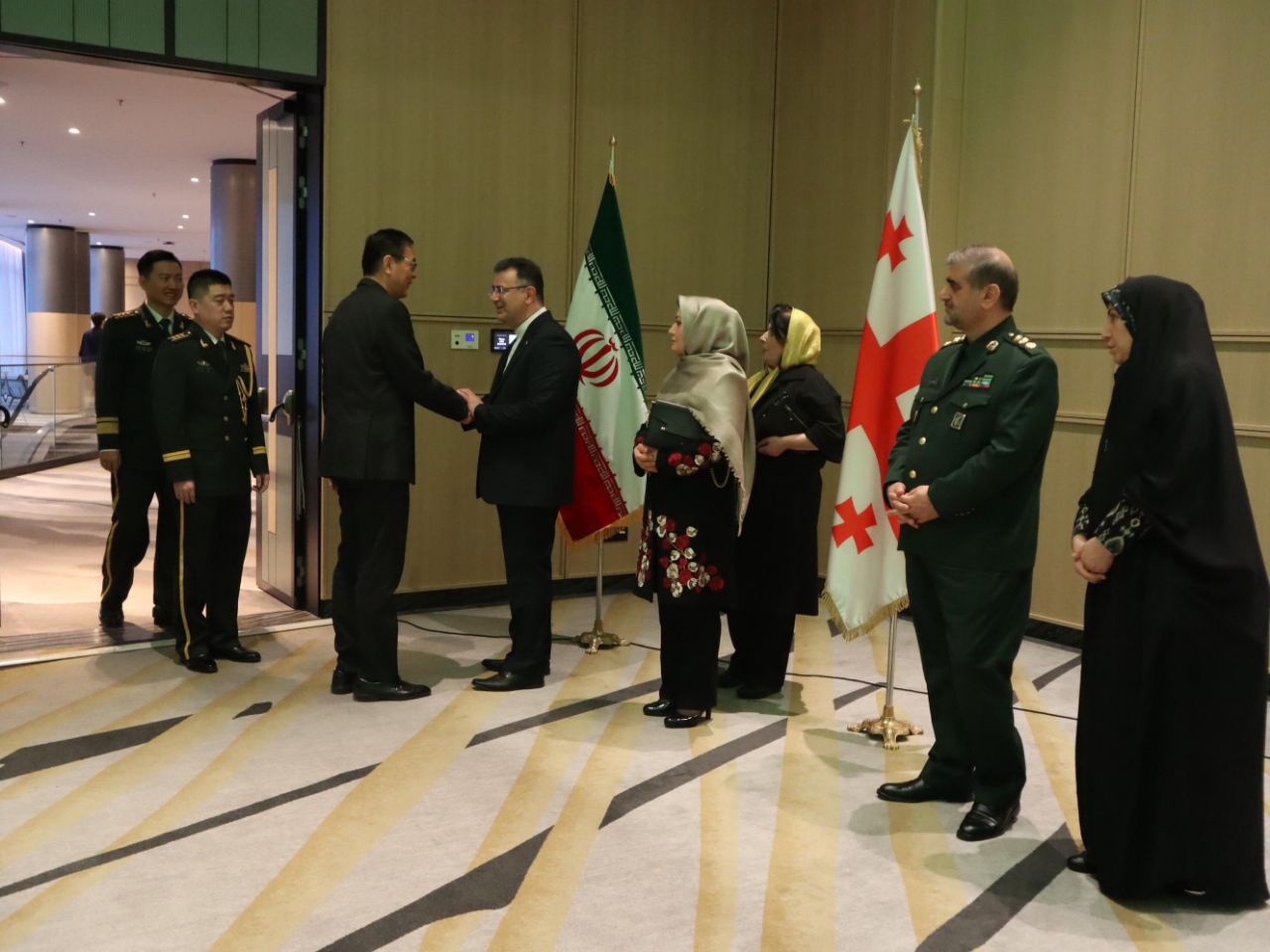
The event was attended by the Deputy Minister of Foreign Affairs of Georgia, Mr. Lasha Darsalia, ambassadors and heads of diplomatic missions of various countries, military attachés, as well as representatives of culture, economy, media, and other prominent figures, along with members of the Iranian community residing in Georgia.

The guests were hosted by Seyed Ali Mojani together with his spouse and son.
Afterwards, the Ambassador Extraordinary and Plenipotentiary of the Islamic Republic of Iran to Georgia, Mr. Seyed Ali Mojani, delivered a speech:

“In a few minutes, we will mark the 47th anniversary of the great Islamic Revolution and begin the 48th year of this significant event in the history of modern Iran. This event was not merely a change of political power. For the Iranian people, the Islamic Revolution represented a fundamental transformation in the essence of sovereignty, independence, and national dignity.

Forty-eight years ago, the Iranian people rose against a system that saw its survival in subordination to foreign powers and in alignment with the Western bloc in the bipolar world order of that time. The voice of the revolution was expressed in two sentences: ‘The Shah left and the Imam came.’ In two words, the revolution’s call was independence and freedom — replacing monarchy with a republican system.

The main message of the revolution was the rejection of submission, resistance to historical humiliation, and the transfer of power to the people through elections, granting them the right to determine their own destiny — a process that has continued over the past 47 years.

Forty-eight years ago, on this very day, I was an eleven-year-old boy living in central Tehran, just a few hundred meters from the Shah’s palace and the Prime Minister’s office. My memories of that day are associated with a city engulfed in revolutionary fervor, whose people took to the streets to restore dignity, national sovereignty, and democracy.

Dear guests,

For my generation, this is no longer merely a memory — it is a historical responsibility. Today, nearly half a century later, the Islamic Republic of Iran represents an experience in which the Iranian people have sought to simultaneously preserve political independence, social stability, economic development, and an active regional role.
Today’s Iran, situated in one of the world’s most sensitive geopolitical regions, strives to remain active rather than passive amid external pressures, internal developments, and rapid changes in the international order.

Iran’s foreign policy is based on rational engagement, dialogue, and active diplomacy. Its pillar is defensive capability — not founded on weapons of mass destruction, but on national conviction. Thanks to this capability, Iran does not submit to conditions dictated by major powers, does not accept isolation, and always welcomes dialogue as a means of resolving disagreements.
The Islamic Republic of Iran names mutual respect, equal rights, and rejection of unilateral impositions as the only conditions for dialogue.

Iran’s active role in international structures such as the United Nations, the Non-Aligned Movement, the Shanghai Cooperation Organization, BRICS, the Eurasian Union, and other regional mechanisms demonstrates its engagement in shaping a multipolar world order.

Historical experience has taught us that diplomacy without deterrence is ineffective. Defending Iran’s territory, maritime domain, and airspace means defending the nation’s right to life.

For two consecutive centuries, Iran has never initiated a war, yet it has never left any external threat or aggression unanswered.

Despite war, sanctions, political pressure, and widespread restrictions, Iran has achieved significant social progress: expansion of public education, development of healthcare networks, increased life expectancy, and improved access to social services in poor regions — achieved through the collective efforts of the Iranian people under sanctions.

Sanctions even affect essential goods such as medicines. However, today Iran has achieved a high level of self-sufficiency in pharmaceutical and medical equipment production.

Iran has developed its communications networks and digital infrastructure, creating a unique domestic network and entering the era of a knowledge-based economy. Today, Iran is one of Asia’s scientific poles, with thousands of scholars contributing to global scientific production.

The role of women in post-revolutionary Iran is another important social reality. Iranian women are active in academia, healthcare, education, research, and social governance, playing a vital role in national development.

Sanctions primarily harm ordinary citizens — patients, students, workers, and their families. Sanctions are a modern form of collective punishment.

The Islamic Republic of Iran stands today at a historical crossroads — from unipolarity to multipolarity, from hegemony to cooperation, and from sanctions to dialogue.

Iran remains ready for engagement based on respect, equality, and recognition of nations’ right to choose their own path.

It was no coincidence that Iran was the first country at the Paris Peace Conference to call for recognition of the independence of Georgia, Azerbaijan, and Armenia. Iran was also the first country to recognize Georgia’s independence in May 1918.

Georgia, together with Azerbaijan and Armenia, has longstanding historical and civilizational ties with Iran. In 1616, the first group of Georgians arrived in Iran, contributing greatly to trade, architecture, and defense.

Today, a representative of Iranian Georgians serves in the Islamic Consultative Assembly, maintaining language and cultural identity for four centuries.

From Iran’s perspective, Georgia is not merely a distant neighbor but a strategic geopolitical bridge between East and West — a key hub in Eurasian cooperation.”

Reminder: 47 years have passed since the Islamic Revolution of Iran. In 1979, demonstrators supporting the Islamic Republic overthrew U.S.-allied Shah Mohammad Reza Pahlavi.

ქეთევან ნინუაhttp://tiflisnews.ge
საინფორმაციო სააგენტო tiflisnews.ge კონტაქტი- ☎️ 555 100 929

Chairman of Supreme Council of Adjara, David Gabaidze, resigns

The Chairman of the Supreme Council of Adjara, David Gabaidze, has announced his resignation today.Expressing his gratitude, Gabaidze thanked the Georgian Dream party, its founder, and all its members, emphasising that his decision was made on personal grounds.He firmly denied rumours suggesting that his close ties to Tornike Rizhvadze influenced his resignation.“I have been contemplating this for a considerable time and have discussed it with my team. Having led the Supreme Council for less than ten years, I believe it is time for new directions. Regarding my connection with Tornike Rizhvadze’s team, it’s important to remember that I was appointed as Chairman of the Supreme Council before Tornike Rizhvadze assumed his role as Chairman of the Government,” Gabaidze explained.He also announced that he will soon relinquish his mandate as a member of the Supreme Council. While he did not disclose specific details, Gabaidze hinted that he has other opportunities ahead.Gabaidze was elected for a third term as Chairman of the Supreme Council following the most recent elections.

Georgian PM on conversation with Marco Rubio: Discussed partnership reset, reinforcing Georgia’s role in South Caucasus

Georgian Prime Minister Irakli Kobakhidze reported having a productive phone conversation with US Secretary of State Marco Rubio, focusing on “resetting the partnership” and Georgia’s role in the Caucasus region.“I had a productive phone conversation with US Secretary of State Marco Rubio. We empathized the importance of resetting our partnership and reinforcing Georgia’s role as a strong partner in the South Caucasus. Committed to strengthening Georgia–U.S. ties and advancing regional stability and connectivity,” Irakli Kobakhidze wrote on a social network.The U.S. State Department released information about a phone conversation between Secretary of State Marco Rubio and Georgian Prime Minister Irakli Kobakhidze.According to the Department, “Secretary of State Marco Rubio spoke with Georgia Prime Minister Irakli Kobakhidze today. They discussed areas of mutual interest including security in the Caucasus and Black Sea region.”

Health Minister: State to expand reference price coverage to protect consumers

‘The state will actively intervene in the pharmaceutical market to protect consumer interests and ensure fair pricing. The authorities believe that the range of medicines subject to reference pricing should be expanded to ensure broader access and affordability,” the Minister of Health of Georgia, Mikheil Sarjveladze, announced. Mikheil Sarjveladze explained that the mechanism for setting reference prices for medicines is actively in place, with ongoing price revisions. At this stage, he emphasized, the reference prices have been set fairly. “If the need arises to adjust the price of a specific medicine, we will address it promptly within the established schedule. Our main priority remains the same: protecting the consumer’s interests. We believe the prices already set are fair,” said Sarjveladze. He also noted that the ministry aims to ensure that medicines in Georgia are available at prices comparable to those in four relevant reference countries.

Tamar Bagrationi: Representing Georgia at Global Summit was a great honor

“The Global Summit, where I was invited by the First Lady of the United States, Melania Trump, has ended. For me, this summit was a great experience and a great honor, as I represented Georgia,” said the First Lady of Georgia, Tamar Bagrationi, while summarizing her visit to the United States.According to Bagrationi, the summit brought together representatives from 45 countries and focused on globally significant issues.“The topic was important and relevant worldwide, addressing the development of new technologies and their integration into education. Many countries expressed interest in hosting events within the framework of this platform. I am convinced that the personal relationships formed during the summit are among the most valuable outcomes,” she said.The Global Summit, titled Together for a Better Future, was held in Washington, D.C. at the invitation of Melania Trump.The Georgian delegation also included Baia Kvitsiani, Deputy Minister of Education, Science and Youth of Georgia, and Mariam Lashkhi, Chairwoman of the Parliament’s Committee on Education, Science and Youth Affairs.

Metropolitan Shio: Passing of righteous man carries its own consolation; we witnessed true miracle, as Georgia rose up to honour Ilia II

“The passing of a righteous man carries its own consolation, and we have been witnesses to a true miracle. All of Georgia rose to its feet and stirred, to pay homage, to give thanks, to show its love for Ilia II. That love, that unity, has given us immense spiritual strength and consolation to carry us through the most difficult of days. It gives us hope that we shall be able to preserve the great values that our Patriarchs have handed down to us,” declared His Eminence Shio (Mujiri), Metropolitan of Senaki and Chkhorotsku, and Locum Tenens of the Patriarchal Throne, in a sermon delivered at Sioni Cathedral.Metropolitan Shio extended his congratulations to the people on the Day of the Restoration of the Autocephaly of the Georgian Church, and spoke of the labours of Ilia II in that cause.“It is true that in 1917 we proclaimed the restoration of Autocephaly, yet what was still required was its recognition by the Patriarchate of Constantinople and by the Orthodox Churches of the world. It was His Holiness and Beatitude Catholicos-Patriarch Ilia II who took this great cause upon himself. Through years of tireless labour and by the weight of his immense moral authority, he achieved what had long been sought: in 1990, on the Feast of the Triumph of Orthodoxy in Constantinople, the Ecumenical Patriarch, His All-Holiness Dimitrios I, presented the Georgian Church with the documents confirming and affirming the recognition of our Church’s Autocephaly and Patriarchal title, rights that had belonged to our Church since antiquity. It may be said that our Catholicos-Patriarch Ilia II crowned the labours and struggles of our forebears in the cause of Autocephaly.Today we stand in this holy Cathedral of Sioni, filled with deep reverence and gratitude towards our holy Patriarchs and ancestors, those who would not accept, who never accepted, the loss of Autocephaly. Through their self-sacrifice, their toil, and at the cost of their greatest efforts, they restored and returned to our country and our Church the ancient, historic Autocephaly that had once been its own. These were the holy Catholicos-Patriarchs Kirion, Ambrosi, Kalistrate, Leonide, Kristepore, Melkisedek, Eprem, and others, both clergy and laity, among them Metropolitan Anton Giorgadze and many more. The Catholicos-Patriarchs rest here, in this holy cathedral, and beside them, their worthy heir and the continuer of their work, Catholicos-Patriarch Ilia II, has now found his eternal resting place. As the Gospel says, all can see how his works shine before men, that we may glorify our Father in Heaven.These have been days of the deepest grief for us. And yet we know that when a holy and righteous person departs this life, consolation and even joy accompany that passing. We waited to see how this would manifest. And we have been witnesses to a true miracle, all of Georgia rose to its feet and moved towards the remains of His Holiness and Beatitude, to venerate, to give thanks, to express its love. There was a wondrous unity, a love for God and a love for him personally. For in him, our people glorify the Church and glorify God; it is to God that they give thanks. This outpouring of love and unity gives us great spiritual strength and consolation to carry us through these hardest of days. It also gives us great hope that, with God’s help, we shall be able to preserve those great values bequeathed to us by our great Patriarchs and forebears, above all, what His Holiness Catholicos-Patriarch Ilia left to us as his legacy: true faith in God, fidelity to the homeland, and love for one’s fellow man. If we preserve these things, if we strive and labour for their sake, the Lord will surely come to our aid and grant us the strength to preserve both our ecclesiastical Autocephaly and our national independence, and to see our country made whole and strong once more.Once again, I congratulate you on the Day of the Restoration of the Autocephaly of the Georgian Church. May God bless you and grant you strength. May God bless, remember, have mercy upon, and grant eternal rest to the immortal soul of His Holiness and Beatitude, Catholicos-Patriarch Ilia II. May God bless, unite, and save Georgia,” Metropolitan Shio has said.Today, March 25, marks the ninth day since the passing of Ilia II. At Sioni Cathedral, the Locum Tenens of the Patriarchal Throne, Metropolitan Shio (Mujiri) of Senaki and Chkhorotsku, served an intercessory prayer and prayer vigil together with the assembled bishops and clergy. The service was attended by the Prime Minister of Georgia, Irakli Kobakhidze, the President of Georgia, Mikheil Kavelashvili, and the Speaker of the Georgian Parliament, Shalva Papuashvili.His Holiness Ilia II, the 141st Catholicos-Patriarch of All Georgia, passed away on March 17 at the age of 93. He was laid to rest at Sioni Cathedral on March 22.

Latest News