Wednesday, February 25, 2026

Parliament approves amendments to Law on Broadcasting in first reading

The Parliament has reviewed and approved, in the first reading, a draft law amending the Law on Broadcasting, which addresses funding received by broadcasters from foreign entities. The bill was supported by 82 members of Parliament.

The draft law proposes restrictions on direct or indirect funding from foreign entities to broadcasters, with exceptions for commercial advertising, teleshopping, sponsorship, and product or service placement within programs.

Additionally, the bill introduces restrictions on the procurement of broadcasting services by foreign entities, as well as limitations on the direct or indirect funding (co-funding) of program production and broadcasting.

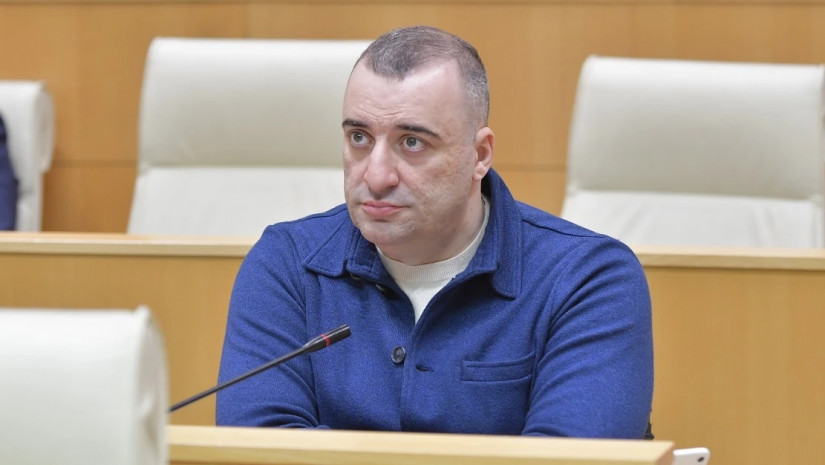
“Georgia is a sovereign state, and our democratic institutions, including the media, should not be controlled from abroad. When external forces dictate the media agenda, it alters priorities and objectives, shifting the focus from informing the public to serving the agenda of the ‘client’—which, in most cases, does not align with the national interests of the state”, Rati Ionatamishvili, Chair of the Human Rights and Civil Integration Committee, stated.

ქეთევან ნინუაhttp://tiflisnews.ge
საინფორმაციო სააგენტო tiflisnews.ge კონტაქტი- ☎️ 555 100 929

Exclusive Interview with the Ambassador of Iran to Georgia: Iran and the United States Have Already Covered Half the Path Toward a Nuclear Agreement

Mr. Ambassador, allow me to begin with the most important issue — the shadow of war looming over Iran. American military forces are on alert. Military action could begin at any moment. At the same time, Iran has responded to the latest proposals from the United States. In your view, who holds the advantage in this situation? The reality is that no one benefits from war. Over the past weeks, the level of military readiness has been high. However, at the same time, diplomatic channels are also functioning. We are observing developments carefully and with restraint. Iran is a state with a long historical background and extensive security experience. Our strategy is clear: to firmly safeguard our national security while giving serious priority to a political resolution. In such circumstances, victory is defined not by starting a conflict, but by preventing it.To avoid war, an agreement is necessary. How far have nuclear negotiations between Iran and the United States progressed? According to the analysis of numerous observers, significant progress has been achieved on fundamental issues. For the United States, the central issue is ensuring that Iran does not possess nuclear weapons. Iran’s position is also clear: weapons of mass destruction have no place in our security doctrine. When there is mutual understanding on this key issue, it represents a major step forward in itself. This means we have already covered half the path. What remains is to continue discussions on implementation mechanisms, the framework of cooperation, partnership, trade, and future investments.If an agreement is not reached, what will happen? Do you consider the likelihood of military conflict realistic? That depends on the decisions taken in Washington by American authorities. What I can say is that any type of conflict would have a regional character, and its cost would not be borne by only one side. Iran does not seek to ignite a war, but it will defend itself without hesitation. Historical experience shows that instability — especially in a sensitive region such as the Middle East — leads to consequences greater than initially predicted. In our view, strategic rationality requires the continuation of the diplomatic path.Iran states that it does not welcome war, yet it does not fear it. Where does this confidence come from? Any country that has experienced complex security challenges trusts in its own defense capabilities. Iran, which over the past decades has been under various pressures and threats, has strengthened its defense structures. However, confidence in defense does not mean that we prefer war. Deterrence exists precisely to prevent war.How would you summarize your position in one sentence? We have achieved progress on fundamental principles and are ready to continue dialogue on the next steps. Iran prioritizes expanding investment, trade, and economic cooperation in our region, as well as creating markets. Spending human and economic resources on conflict leads to undesirable consequences. When you have the opportunity, visit the garden of the British Embassy in Tehran. There lie 500 soldiers who died during the occupation of Iran during World War II. No country wishes to inherit another cemetery instead of industry and trade.

Tbilisi Mayor backs vulnerable families database reform, says post-pandemic failure to update register has left it “unfit for purpose”

Tbilisi Mayor Kakha Kaladze has welcomed the announcement by Health Minister Mikheil Sarjveladze regarding the review of the database of socially vulnerable families, describing the reform as vitally important.Kaladze emphasised that the granting or withdrawal of social assistance has nothing to do with party affiliation, regardless of how some choose to frame it.“Whenever the question of putting a particular area in order arises, whenever reform is on the table, the speculation and falsehoods inevitably follow. We saw the same thing with prices. Whatever the direction, the moment the government says that change is needed, what we hear in response are lies.Regarding socially vulnerable families, implementing this reform is of utmost importance, and I wholeheartedly welcome it. I have expressed this sentiment on numerous occasions at government meetings; my remarks are on record, should anyone wish to consult them. Despite our country’s ongoing development and economic progress, there remain, regrettably, families and individuals who require our solidarity and support.For as long as such families exist, the state is duty-bound to do everything in its power to stand beside them and help them, whether through healthcare programmes or social support schemes,” Kaladze said.He noted that the database has not been updated since the pandemic period.“The announcement we heard from the Health Minister serves a single purpose: to better support those families and individuals who are in the greatest need today and require our assistance. I recall that during the pandemic, decisions were made regarding support, and those decisions were appropriate at the time. However, circumstances have now changed. Therefore, the database of socially vulnerable families must be reviewed. During that difficult period, many people who received state support were added to the lists. As far as I am aware, the database has not been properly updated since then, which is precisely why the measures outlined by the Minister are so important,” Kaladze said.The Mayor was equally forthright in dismissing as falsehoods any attempt to link the granting or withdrawal of social assistance to party-political considerations.Georgia’s Ministry of Health has announced it is commencing a review of the unified database of socially vulnerable families.

Otar Partskhaladze: A case against me in Georgia was fabricated on the orders of foreign patrons – I am being persecuted for fabricated crimes,...

A case against me in Georgia was fabricated on the orders of foreign patrons – I will do everything to strengthen fraternal relations between the Georgian and Russian peoples, former Prosecutor General of Georgia Otar Romanov-Partskhaladze said in an interview with the Russian state outlet Moskovskij Komsomolets.“I am being persecuted for fabricated crimes, for something I did not commit. They are trying to take away my historical homeland. International criminal groups have declared a hunt against me. I am not afraid. All of this best confirms the correctness of the path I have chosen. I am ready to sacrifice my life for the happy future of our children.It is time to leave behind the grievances of the past, created by the enemies of our nation, and move forward. The Georgian people must open their eyes and understand who acts in their interests and who weaves intrigues, serving foreign patrons and destroying our identity, traditions, and unity. This is how we will be able to preserve our sovereignty, our traditions, and our faith,” Partskhaladze said.He also spoke about strengthening “fraternal relations” between the Georgian and Russian peoples.“I have walked a long and dangerous path in the service of my homeland – Georgia. And today I have found myself exactly at the point from which I know a new chapter will begin in relations between our fraternal nations…Orthodox faith unites us…I will do everything to strengthen fraternal relations between the Georgian and Russian peoples, based on respect, unity, and joint resistance to external threats,” Partskhaladze stated.For reference, the former Prosecutor General Otar Romanov-Partskhaladze is accused of organizing the contract and financially motivated intentional murder of businessman Levan Jangveladze. He has been charged under Article 25/109, subparagraph “n” of the Criminal Code of Georgia, which concerns organizing a contract killing for financial gain. In addition, Partskhaladze has been charged in the so-called call center case.Partskhaladze has been sentenced to pre-trial detention in absentia.

Georgia’s Health Ministry to audit vulnerable families database amid fears of widespread benefit fraud

The Georgian Ministry of Health is launching a comprehensive review of the unified database of socially vulnerable families, Health Minister Mikheil Sarjveladze announced at a press briefing today.According to the Minister, the database continues to include individuals and families who no longer require state social assistance.“At present, the number of families registered in the unified database of socially vulnerable households and receiving financial assistance exceeds 185,000, with a combined membership of some 710,000 individuals. In total, nearly 400,000 families, approximately 1,300,000 individuals, are registered in the database. More than half of these are not receiving any allowance, though a significant proportion do benefit from various types of concession provided under current legislation,” the Minister stated.Sarjveladze also noted that the database has repeatedly been exploited for unscrupulous political point-scoring.“Since 2012, the eligibility threshold score for receiving assistance has been raised twice, to support a greater number of people. Had that threshold not been increased, had the state not extended allowances to those who are comparatively better off, the number of recipient families today would stand at no more than 120,000, rather than 185,000.Regrettably, delays in the verification process, coupled with various objective and subjective factors, provided opposition-minded individuals with grounds for such speculation. It is also important to note that, in the aftermath of the COVID pandemic, a so-called moratorium was in place, during which, with only rare exceptions, household verifications were effectively suspended. As a result, the database still contains individuals and families who, thankfully, no longer require state social support,” Sarjveladze explained.The Minister further revealed that some cases are entirely anomalous. One family registered in the database and receiving assistance had, in the preceding three months alone, recorded a combined income of several tens of thousands of lari. Another had purchased multiple vehicles worth several tens of thousands of lari within a single year. One household acquired a brand-new 2025 model car that same year, while another had taken out bank loans amounting to several hundred thousand lari.“The number of such families is not insignificant, though in the majority of cases, what we are dealing with are households whose material circumstances have improved over time, whose situation is no longer such that the state ought to be providing them with financial assistance,” Sarjveladze concluded.

Paris Court of Appeal terminates payment to Enka Renewables LLC by Georgian government until final verdict

In a significant decision for international arbitration in France, in Namakhvani Hydro Electric Power Plant case, the Paris Court of Appeal confirmed the termination of USD 400 million by the Georgian government in favor of Enka Renewables LLC until the final verdict.The case has to do with a USD 800 million Namakhvani hydropower project for which the Georgian government and Enka Renewables LLC concluded a BOO (Build–Own–Operate) Agreement in 2019.According to the decision of the Paris Court of Appeal, large‑scale protests by local communities and environmental groups disrupted the project, and Enka terminated the BOO Agreement in 2021, invoking force majeure and Georgia’s alleged events of default.In 2022, Enka initiated ICC arbitration seeking compensation for termination and the value of transferred assets.On 13 November 2024, the arbitral tribunal rendered a final award, followed by an addendum dated 6 January 2025, holding that the termination was and ordering Georgia to pay approximately 400 million USD.The Georgian government submitted three requests to the Paris court: annulment of the decision, refusal of the enforcement permit, and suspension of payment. Enka Company requested the enforcement permit.The Court first examined whether the award fulfilled the conditions for exequatur under Article 1514 CPC. Georgia argued that the award violated international public policy, claiming that the tribunal had relied on a “Financial Model” annexed to the record without ensuring adversarial debate. The Court recalled the narrow scope of its review under Article 1514 CPC. Only a manifest breach of international public policy, apparent from the face of the award, can justify refusing exequatur. After examining the award, the Court did not find such a breach. The Court confirmed that the existence of annulment proceedings did not influence the granting of exequatur, which is assessed autonomously under Article 1514 CPC.Having granted exequatur, the Court then examined Georgia’s request for a stay of enforcement under Article 1526. Georgia argued that immediate enforcement of a USD 400 million award would gravely affect essential public budgets, representing 60% of the national defence budget and around 250% of the Ministry of Justice’s annual allocation.The Court accepted this evidence as demonstrating a serious and concrete impact on Georgia’s ability to meet vital public functions.The Court also noted that Enka was a special‑purpose project company created solely for the Namakhvani project and no longer carrying any business activities or holding significant assets.In the Court’s view, this increased the risk that sums paid in enforcement might not be recoverable should the award ultimately be annulled. These combined factors constituted a grave infringement of Georgia’s rights, justifying a suspension of enforcement.The Court therefore ordered a stay of enforcement of the award and its addendum until the decision on the annulment application is rendered.

Latest News