
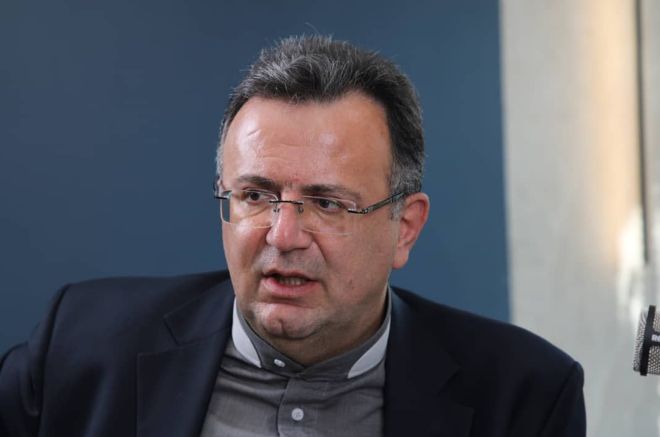

“Last night, a group of official representatives and leaders of Georgia’s Muslim community visited my residence to express their sympathy and condolences over the martyrdom of the Supreme Spiritual Leader of the Islamic Republic of Iran, Ayatollah Seyed Ali Khamenei, as well as the deaths of a number of innocent people, including 158 girls from an elementary school in Minab.
During the meeting, it was noted that Iran’s martyred spiritual leader, throughout the difficult years of sanctions and external pressure, led the nation like a responsible and devoted father of a large family. At a time when sanctions were placing immense pressure on people’s daily lives, he protected the country from instability. His character, leadership style, and conduct over more than three decades nurtured a generation that today possesses the necessary readiness and capability to defend its independence, security, and territorial integrity.
Beyond his political position, he held a distinguished status among hundreds of millions of Shiites worldwide and played a broad social and religious role. Naturally, part of the global Shiite community is mourning the loss of such a figure. However, the events of Ashura and the message of Saint Zaynab demonstrate that patience, education, and speaking the truth are effective means in the struggle against oppression and injustice. It is also essential today to present information about these events to global public opinion in a rational and morally sound language — one that transcends religious and sectarian boundaries and appeals to the awakened and free conscience of the world.
At the meeting, several important points were emphasized: any form of attack on civilians, especially children, is condemnable and morally unacceptable.
Maintaining regional stability and peace is a shared responsibility, and preventing further tension requires prudence, restraint, and dialogue. The historical and cultural ties among peoples represent an important opportunity for overcoming crises and strengthening peaceful coexistence.
These sincere condolences were an expression of human solidarity and religious responsibility. All of this reminds us that only through patience, dialogue, and mutual respect can a safer world be built for children and for all peoples.
In Western countries, certain political approaches toward Muslim communities have long been subjects of discussion and criticism. At the same time, experiences vary from country to country, and presenting a uniform picture is impossible. What is particularly important is the extent to which states practically uphold the principles of freedom of religion, human dignity, and equality of citizens.
Today, we gathered in Georgia, where the authorities have officially recognized the rights of the Muslim community and have provided a legal framework and official space for their religious and social activities, as with other religions. This approach, based on mutual respect and peaceful coexistence, represents a valuable example in the region.
In recent years, Georgia’s religious and political leaders, during meetings and discussions with Iranian leaders, have emphasized the importance of interfaith dialogue and the positive role of bilateral relations. In this context, it is worth noting the warm meeting and conversation held in Tehran between His Holiness Ilia II, Catholicos-Patriarch of the Georgian Orthodox Church, and Iran’s spiritual leader, which served as an expression of mutual respect and religious dialogue.
The historical experience of the Caucasus demonstrates that Muslims and Christians have lived side by side for centuries. This fact confirms that political conflicts must not be reduced to religious or sectarian confrontation.
Geopolitical tensions, however complex, are political in nature, and their solutions must be sought within the framework of politics, dialogue, and international law.
Even in the current situation, it is essential that narratives be transparent, well-founded, and responsibly conveyed. The fact that the United States attempts to find new justifications for each military action underscores, above all, the necessity of returning to diplomacy and preventing further escalation. Today, the region and the world need responsible dialogue and the avoidance of exhausting wars more than ever,” wrote Seyed Ali Mojani, Ambassador of the Islamic Republic of Iran to Georgia, on Facebook.