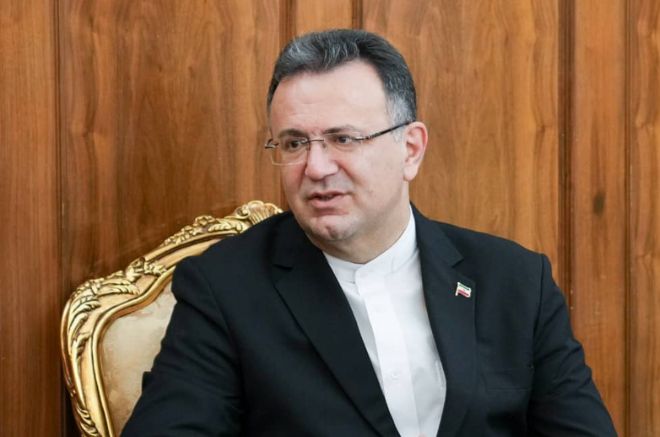

Mr. Ambassador, allow me to begin with the most important issue — the shadow of war looming over Iran. American military forces are on alert. Military action could begin at any moment. At the same time, Iran has responded to the latest proposals from the United States. In your view, who holds the advantage in this situation?
The reality is that no one benefits from war. Over the past weeks, the level of military readiness has been high. However, at the same time, diplomatic channels are also functioning. We are observing developments carefully and with restraint.
Iran is a state with a long historical background and extensive security experience. Our strategy is clear: to firmly safeguard our national security while giving serious priority to a political resolution.
In such circumstances, victory is defined not by starting a conflict, but by preventing it.
To avoid war, an agreement is necessary. How far have nuclear negotiations between Iran and the United States progressed?
According to the analysis of numerous observers, significant progress has been achieved on fundamental issues. For the United States, the central issue is ensuring that Iran does not possess nuclear weapons.
Iran’s position is also clear: weapons of mass destruction have no place in our security doctrine. When there is mutual understanding on this key issue, it represents a major step forward in itself. This means we have already covered half the path.
What remains is to continue discussions on implementation mechanisms, the framework of cooperation, partnership, trade, and future investments.
If an agreement is not reached, what will happen? Do you consider the likelihood of military conflict realistic?
That depends on the decisions taken in Washington by American authorities. What I can say is that any type of conflict would have a regional character, and its cost would not be borne by only one side.
Iran does not seek to ignite a war, but it will defend itself without hesitation. Historical experience shows that instability — especially in a sensitive region such as the Middle East — leads to consequences greater than initially predicted.
In our view, strategic rationality requires the continuation of the diplomatic path.
Iran states that it does not welcome war, yet it does not fear it. Where does this confidence come from?
Any country that has experienced complex security challenges trusts in its own defense capabilities. Iran, which over the past decades has been under various pressures and threats, has strengthened its defense structures.
However, confidence in defense does not mean that we prefer war. Deterrence exists precisely to prevent war.
How would you summarize your position in one sentence?
We have achieved progress on fundamental principles and are ready to continue dialogue on the next steps. Iran prioritizes expanding investment, trade, and economic cooperation in our region, as well as creating markets. Spending human and economic resources on conflict leads to undesirable consequences.
When you have the opportunity, visit the garden of the British Embassy in Tehran. There lie 500 soldiers who died during the occupation of Iran during World War II. No country wishes to inherit another cemetery instead of industry and trade.