
Recalling historical dates — whether painful or joyful — serves neither to glorify nor to justify anyone; its purpose is understanding. We are not responsible for the policies, wars, and decisions of eras in which we ourselves did not live; however, we are fully responsible for how we engage with this historical experience today.
The task of historiography is not to deliver moral verdicts, but to document and reconstruct human experience: how societies managed, amid forced displacement, political violence, and geopolitical confrontations, to preserve their language, collective memory, traditions, and social life.
A historian who, instead of reflecting on the complexities of coexistence and cultural exchange, limits himself solely to issuing political judgments turns history into an ideological instrument. Power — whether in the 17th century or the 21st — rarely concerns itself with human fate; therefore, it depends on us, through dialogue, research, and documented narrative, to prevent the repetition of past traumas, strengthen social resilience, nurture hope, and sustain the possibility of coexistence.
History does not exist to shame others, but to make us more responsible.
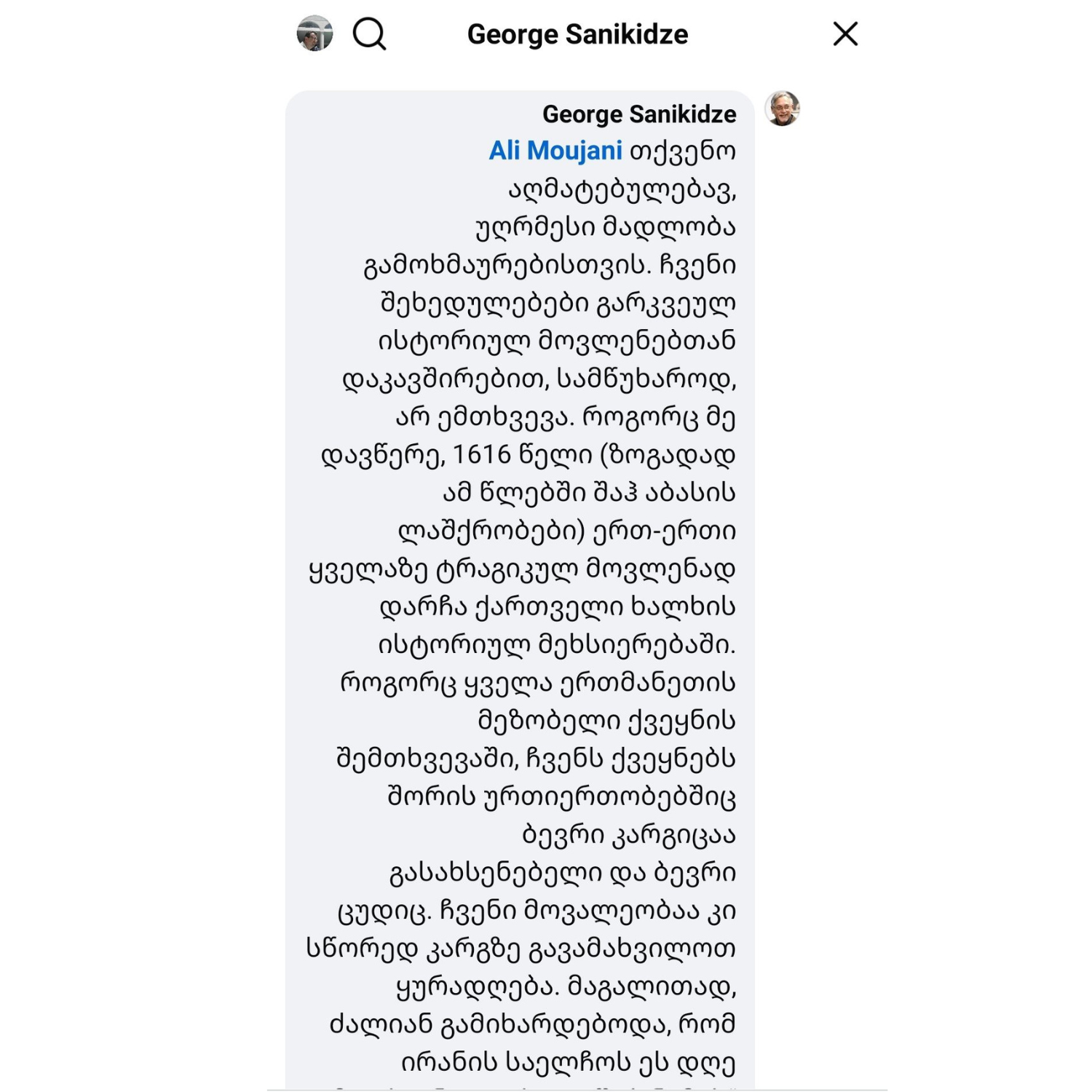
This was written on social media by the Ambassador of Iran to Georgia, Seyed Ali Mojani.